Showing posts with label France. Show all posts
Thursday, 2 February 2017
Chronicles from Paris | Cruise on the Seine
Some of the most beautiful views of the city are possible from the Seine. Therefore, if you are visiting Paris, hopping in to a bateaux could be one of the best ways to move across the city and to have access to different perspectives of its major monuments and most charismatic neighborhoods.
We travel with Batobus and we start our journey at the pier close to the Eiffel Tower. With this line is possible to hop on and off the boat at any of the 9 stations spread across the Seine, on both the banks of the river, to visit any place on land that you choose. You can choose to buy a Day Pass or a Pass for 2 days. Both passes present a price quite reasonable for the service rendered and if you have plenty of time I really advise to choose the 2 Days Pass, for most of the attractions are close to the river and this is a very quick and comfortable way of traveling trough the city.
While in Paris, you can also opt for a boat where you can have lunch or dinner, and I must tell you a romantic dinner in a bateaux sur le Seine is on my list for a future visit to Paris. But if you are on a more tight budget, the option is to buy a day pass and to prepare a picnic to eat in one of your chosen places to visit, will be equally agreeable. Choose your place and prepare your camera for a non stop photographic session of some of the most beautiful spots, monuments and bridges of Paris.
Map with the 9 Batobus Stations (Via Batobus)
Batobus
Port de la Bourdonnais
75007 Paris
1day Pass (valid for one day) - 17€ | Children (3 to 15 years) - 8€ | Free for children under 3 years
Thursday, 5 January 2017
Chronicles from Paris | Jardin des Tuileries
The Tuileries Garden (Jardin des Tuileries), located between the Place de la Concorde and the Louvre Museum, was originally commissioned by the Queen Catherine de Medici in 1564. The gardens and the Palace with the same name (destroyed in a fire in 1871) get their name from the tile (tuile, in French) workshops that stood on site previously to their construction.
In 1664, the famous gardner of King Louis XIV, André Le Nôtre (have you seen the movie A Little Chaos?) re-landscaped the gardens to the French formal style they present until today. Opened to the public in 1667, the gardens became a public park after the French revolution and currently are one of the Paris places of choice to relax and promenade, both for visitors and locals.
To seat by the pond, enjoying the sun and savoring an ice cream after the long walk from the Arc du Triomphe, was pure heaven. You can find several cafés and food stands in the gardens. In wintertime my choice goes to crepes (does Nutella crepe sounds good to you?) and in the summer to something fresher. If its not your starting point of the day, its a really cool place to rest for a while before resume your walk trough Paris.
The statuary collection displayed in the park is huge and you can see works from Maillol, Rodin or Giacometti standing alongside on the gardens grounds. If you are into cultural traveling you surely will be visiting the Louvre Museum, but if you have the time the Musée de L'Orangerie (in the south-west side of the garden) is a place to go if you love the work of Monet.
Walking towards the Louvre, eventually you reach the Place du Carrousel, where features the Arc du Triomphe du Carrousel, built to celebrate the victories of Napoleon and that is perfectly aligned with the arch at the Place d'Étoile.
Jardin des Tuileries
113 Rue de Rivoli, 75001 Paris, França
Opening Hours and Ticket Prices:
Opens between 7.00am and 7.30am, and closes between 7.30pm and 11.00pm according to season.
Free access to garden for all public.
Monday, 26 December 2016
Your 10 Favorite Wanderer's Blog Posts from 2016
The year is coming to an end and this 9 months of Chronicles couldn't be more rewarding. I'm grateful for your visits and feedback and could not finish the year without highlighting your favorite posts. So, lets hear the drums for the 10 most visited posts of 2016.
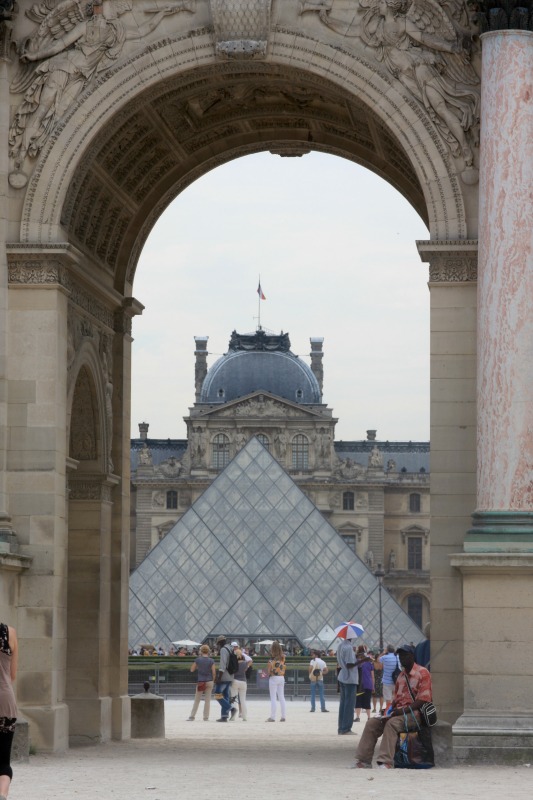
1. JARDIN DU LUXEMBOURG (PARIS)
Situated between Saint-Germain-des-Prés and the Latin Quarter, the Luxembourg Gardens are a haven of peace and tranquility in the middle of the city's bustle. Inspired by the Boboli Gardens and by the Pitti Palace in Florence, the Gardens and the Palace of Luxembourg were created for Queen Marie de Medici in 1612, allowing her to remember her native city. (Keep reading here)
2. STREET ART AT LX FACTORY (LISBON)
Lisbon is well known for its street art, presenting allover the city great examples of the work of both Portuguese and foreigner artists. If you appreciate street art, maybe the names of Vihls and Bordalo II are familiar to you, as they have works all over the world. While Vihls is particularly known for carving faces on building facades, Bordalo II creates amazing works of art from trash. (Keep reading here)
3. GIFT IDEAS FOR TRAVELERS
We are a week away from Christmas and for those of you that have been procrastinating gift shopping or that have run out of ideas for that friend that also loves traveling, here is some help.
Actually this is my list to Santa (hope you are reading my post dear Santa!) but I'm sharing it with you just in case it can be of any help. There are more budget friendly suggestions and some that are a little more expensive, but I'm sure that in this 10 suggestions you will find something that will make your friend or loved one really happy. (Keep reading here)
4. PLACE DES VOSGES (PARIS)
Once a swamp, the Marais (french word for marshland) district grow in importance on the fourteenth century due to its proximity to the Louvre Palace. In the seventeenth century became the favorite living place for the richest families in Paris, who built sumptuous mansions characteristic of the neighborhood. Today the Marais is a dynamic part of the city, with modern boutiques, great art galleries, upscale hotels and restaurants. (Keep reading here)
5. THE INFERNO MOVIE TOUR (FLORENCE)
In 2013, shortly after the release of Dan Brown's novel, Inferno, I visited Florence. Can't remember anymore if I read the novel before or after visiting the city, but now, that the film, based on the novel, as been released, occurred to me that could be a good idea to have a post on the main Florence locations of the movie. (Keep reading here)
6. LAS RAMBLAS (BARCELONA)
Las Ramblas is one of the main streets of Barcelona and, often, one of the first landmarks that most visitors identify with the city. This central boulevard, which cuts through the heart of the city centre, is a vibrant and agreeable promenade of approximately 1,3 kilometers, connecting Plaza Catalunya to Port Vell harbor. To the west it borders with El Raval area and east of Las Ramblas you can find the Barri Gòtic. (Keep reading here)
7. PALÁCIO FRONTEIRA (LISBOA)
Built in seventeenth century, as a hunting lodge, for the first Marquis de Fronteira, D. João de Mascarenhas, a hero of the Portuguese War of Restoration, this beautiful palace is located on the edge of Parque Florestal de Monsanto, in Largo de São Domingos de Benfica. The Palace was enlarged in the eighteenth century, in a "rocaille" style, and remains in the family to the present days. Currently, is the residence of the 13th Marquis de Fronteira, and is possible to visit some of the rooms, the library and the garden. (Keep reading here)
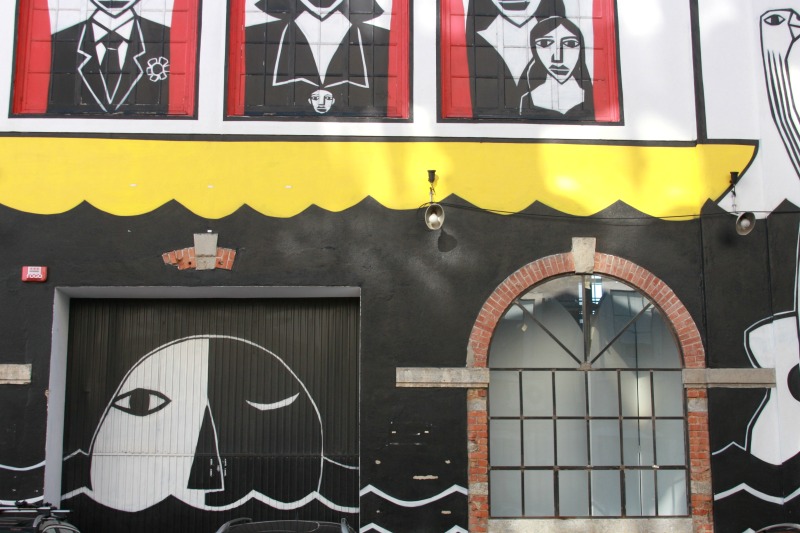
8. MONTMARTRE (PARIS)
A trip to Paris is not complete without a stroll through Montmartre. From the Sacré-Coeur basilica to the typical streets, reminiscent of a provincial village, it is simply lovely. The artists on the streets, the shops, the art galleries, the numerous restaurants and bistros (do not forget to eat some Moules Marinières!), the hustle and bustle of tourists (yes is a bit overcrowded!), the color and the animation, transport us to a less sophisticated Paris, to a bohemian and more irreverent city that captivates you at the first look. (Keep reading here)
9. ÎLE DE LA CITÉ (PARIS)
The history of Paris is strongly connected to the Île de la Cité, usually referred to be the original site of the Parisii tribes. In fact, when Julius Ceasar arrived there in 53 BC he only found a primitive village of fisherman. The Roman presence expanded the settlement to the left bank of the Seine. Later, the Francs conquered the city, named it Paris and made it the capital of their realm. The rest is history. (Keep reading here)
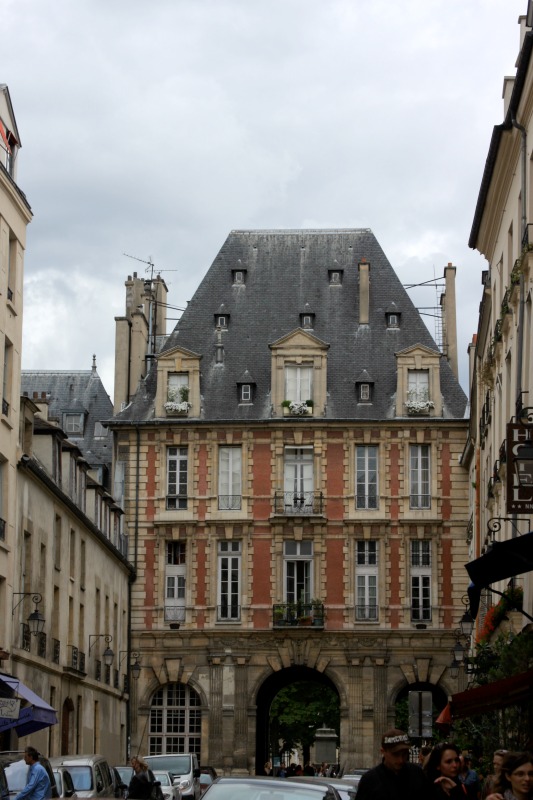
10. CASA MILÁ (BARCELONA)
In Eixample district we find Casa Milà, also known as La Pedrera, a true architectural landmark of Barcelona and one of the must see attractions of the city. Casa Milà is an apartment block designed by Antoni Gaudì and built between 1906 and 1912. This modernist building, inspired by nature and its organic forms, integrates the fantastic vision of Gaudi with the functional demands and comfort expectations of a rich family of the beginning of the twentieth century. Since 1984 Casa Milà was declared an Unesco World Heritage Site due to its outstanding universal value. (Keep reading here)
Friday, 9 December 2016
Chronicles from Paris | L'Arc du Triomphe
The Arc du Triumph is, along with the Eiffel Tower, one of the most iconic monuments of Paris. Located on the right bank of the Seine, is situated at the centre of Place Charles de Gaule (formerly named Place de l'Etoile due to the twelve avenues that radiate from its center). Commissioned in 1806 by Emperor Napoleon to celebrate his victory at Austerlitz, this was for many years the biggest arch in the world.
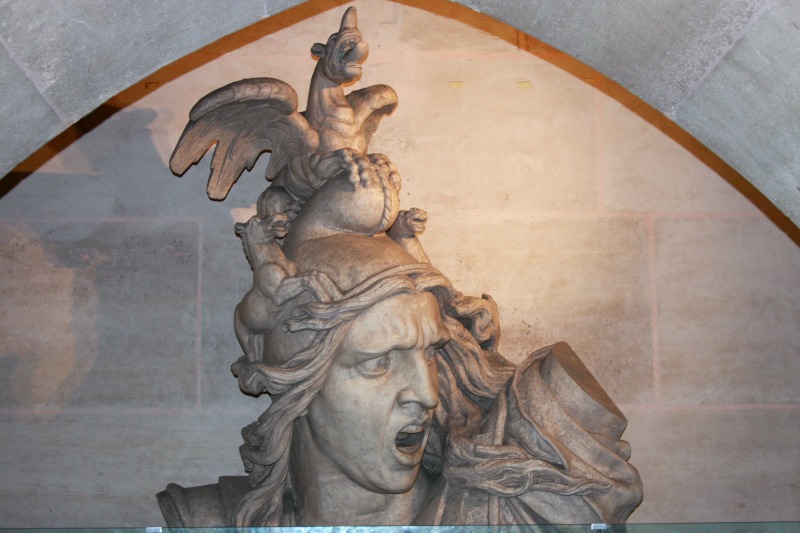
At the base of the arch there are four sculptural groups. The Triumph (1810), Resistance (1814), Peace (1815) and the most renowned the Departure of the Volunteers (1792), commonly called La Marseillaise. Inside the arch, on the top floor, is a stunning replica of the head of the winged figure (Genius of Liberty). The drama and strength in the expression are impressive.
Beneath the arch is the Tomb of the Unknown Soldier, where an eternal flame was lit on Armistice Day in 1920, burning in memory of those who died in the War and were never identified.
Nevertheless all the interesting features displayed in the outside, and the museum inside the structure, a visit is not complete without a visit to the terrace on the top of the monument. Must warn you, that climbing what seemed to me like a thousand steps of a spiral staircase, left me breathless and with my legs muscles burning. But the panoramic view that one can reach from the top of the arch is really worth it.
The city lies at our feet stretching to the horizon. The Eiffel tower on the left bank, the Sacrée Coer to the right. In front, Les Champs-Elysées go down to the Louvre and in the other side are prolonged to reach a new arch built in 1982, the Grand Arch de La Défense, that rises in the new part of the city. This line that connects the Grande Arch, to L'Arc du Triomphe de l'Étoile and than to the Arc de Triomphe du Carrousel (next to the Louvre) form Paris's historic axis or royal route. Closer to the arch, the grey rooftops of the buildings in the boulevards are a charming view.
Arc de Triomphe
Place Charles-de-Gaulle
75008 Paris
Phone : 33 / (0)1 55 37 73 77
Opening Hours and Ticket Prices:
January to March - Daily, 10:00 to 22:30 (closes January 1st)
April to Septembre - Daily, 10:00 to 23:00
October to December - 10:00 to 22:30
Adults - 12€ | Students, teachers 9€ | Children under 18 / People with disabilities - free
Get there taking the subway and exiting at station Charles de gauge - Etoile (Lines 1, 2 and 6).
Tuesday, 15 November 2016
Chronicles from Paris | Île de la Cité
The history of Paris is strongly connected to the Île de la Cité, usually referred to be the original site of the Parisii tribes. In fact, when Julius Ceasar arrived there in 53 BC he only found a primitive village of fisherman. The Roman presence expanded the settlement to the left bank of the Seine. Later, the Francs conquered the city, named it Paris and made it the capital of their realm. The rest is history.
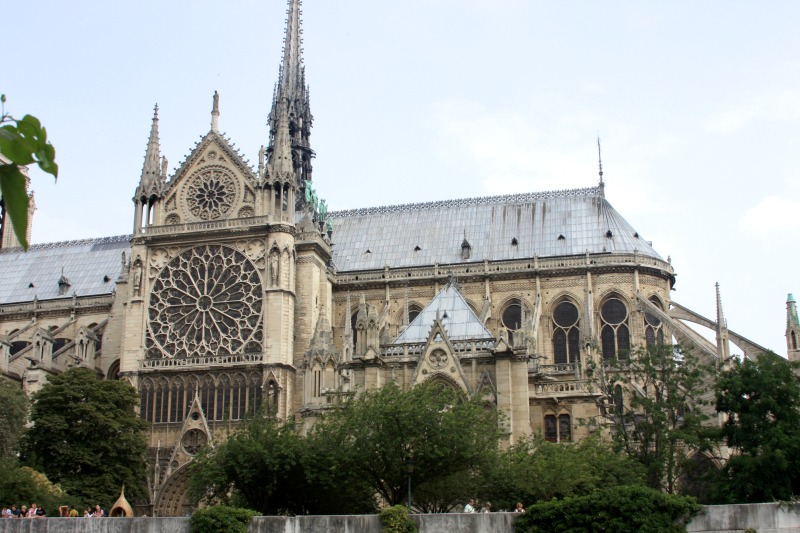
Along the island we can find impressive buildings like the Conciergerie or the Palais de Justice. Nevertheless, the focal point of this small island is Notre-Dame, the great medieval cathedral visited by millions of tourists from all over the world. Built over a pre-existent roman temple, it took 170 years to grow this master-piece of Gothic architecture. With 130 meters long, its towers rise 69 meters high and the spectacular flying buttresses on the eastern part of the cathedral present a span of 15 meters. The beautiful stained glass in the interior and the famous gargoyles and and chimeras complete the appeal of this monument.
After visiting the cathedral, you can relax walking around the Marché aux Fleurs et Oiseaux (Flower and Birds Market) and before you left the island don't forget to visit the Sainte-Chapelle. Smaller than Notre Dame and not so visible from the street, the interiors of this pearl of Gothic architecture are absolutely stunning. The atmosphere inside is almost magical with the colored light filtered through the immense stained glass windows. It's an inspirational place and a monument to human creativity and resourcefulness.
Subscribe to:
Posts (Atom)