Showing posts with label Florence. Show all posts

Saturday, 24 March 2018

Chronicles from Florence | San Lorenzo Market


Whenever and wherever I travel to,  love to visit markets and shops, not just the fancy places or the posh griff stores, but the most popular places. Love the colorful and noisy markets, walking among the local people on their daily activities, buy what is most characteristic, talk with the vendors.

In Florence, I went several times to San Lorenzo Market, which was very close to the hotel. Product diversity was huge. Fresh fruits and vegetables. Good fish, meat and groceries. Helpful and friendly vendors. It was the man who sold the zuppa Toscana mix that gave me the soup recipe and I found  him because the owner of the pasta store walk with  me across the market  to show me the best place to buy what I wanted.


The market goes outside the building with people selling all kind of leather goods, t-shirts and souvenirs. Much of it is directed to tourists and most of the articles are of questionable quality and not interesting at all. But still, if you look around you can find some interesting pieces.

As most of what you do while traveling, is not just the destiny but also what you find on your way there that is interesting. So keep your camera at hand and your eyes open as the vicinities of San Lorenzo Market have many points of interest. The Basilica di San Lorenzo, the Cappella dei Principe, and the Sagrestia Vecchio - a masterpiece of the fifteenth century, that was the first part of San Lorenzo to be completed by Brunelleschi, commissioned by the Medici to be their own mausoleum - are some of the places to visit in San Lorenzo neighborhood.


Monday, 26 December 2016

Your 10 Favorite Wanderer's Blog Posts from 2016


The year is coming to an end and this 9 months of Chronicles couldn't be more rewarding. I'm grateful for your visits and feedback and could not finish the year without highlighting your favorite posts. So, lets hear the drums for the 10 most visited posts of 2016.


1. JARDIN DU LUXEMBOURG (PARIS)


Situated between Saint-Germain-des-Prés and the Latin Quarter, the Luxembourg Gardens are a haven of peace and tranquility in the middle of the city's bustle. Inspired by the Boboli Gardens and by the Pitti Palace in Florence, the Gardens and the Palace of Luxembourg were created for Queen Marie de Medici in 1612, allowing her to remember her native city. (Keep reading here)


2. STREET ART AT LX FACTORY (LISBON)


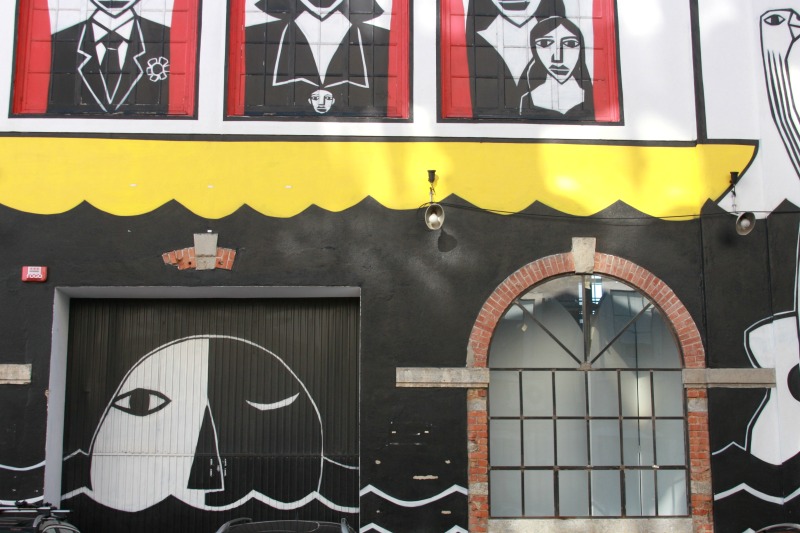
Lisbon is well known for its street art, presenting allover the city great examples of the work of both Portuguese and foreigner artists. If you appreciate street art, maybe the names of Vihls and Bordalo II are familiar to you, as they have works all over the world. While Vihls is particularly known for carving faces on building facades, Bordalo II creates amazing works of art from trash. (Keep reading here)


3. GIFT IDEAS FOR TRAVELERS


We are a week away from Christmas and for those of you that have been procrastinating gift shopping or that have run out of ideas for that friend that also loves traveling, here is some help.
Actually this is my list to Santa (hope you are reading my post dear Santa!) but I'm sharing it with you just in case it can be of any help. There are more budget friendly suggestions and some that are a little more expensive, but I'm sure that in this 10 suggestions you will find something that will make your friend or loved one really happy. (Keep reading here)


4. PLACE DES VOSGES (PARIS)


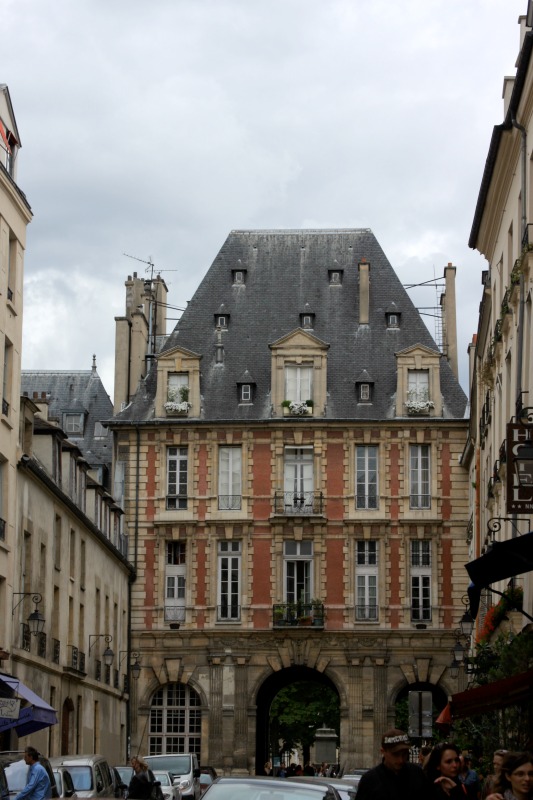
Once a swamp, the Marais (french word for marshland) district grow in importance on the fourteenth century due to its proximity to the Louvre Palace. In the seventeenth century became the favorite living place for the richest families in Paris, who built sumptuous mansions characteristic of the neighborhood. Today the Marais is a dynamic part of the city, with modern boutiques, great art galleries, upscale hotels and restaurants. (Keep reading here)


5. THE INFERNO MOVIE TOUR (FLORENCE)


In 2013, shortly after the release of Dan Brown's novel, Inferno, I visited Florence. Can't remember anymore if I read the novel before or after visiting the city, but now, that the film, based on the novel, as been released, occurred to me that could be a good idea to have a post on the main Florence locations of the movie. (Keep reading here)


6. LAS RAMBLAS (BARCELONA)


Las Ramblas is one of the main streets of Barcelona and, often, one of the first landmarks that most visitors identify with the city. This central boulevard, which cuts through the heart of the city centre,   is a vibrant and agreeable promenade of approximately 1,3 kilometers, connecting Plaza Catalunya  to Port Vell harbor. To the west it borders with El Raval area and east of Las Ramblas you can find the Barri Gòtic. (Keep reading here)


7. PALÁCIO FRONTEIRA (LISBOA)


Built in seventeenth century, as a hunting lodge, for the first Marquis de Fronteira, D. João de Mascarenhas, a hero of the Portuguese War of Restoration, this beautiful palace is located on the edge of Parque Florestal de Monsanto, in Largo de São Domingos de Benfica. The Palace was enlarged in the eighteenth century,  in a "rocaille"  style, and remains in the family to the present days. Currently, is the residence of the 13th Marquis de Fronteira, and is possible to visit some of the rooms, the library and the garden. (Keep reading here)


8. MONTMARTRE (PARIS)


A trip to Paris is not complete without a stroll through Montmartre. From the Sacré-Coeur basilica to the typical streets, reminiscent of a provincial village, it is simply lovely. The artists on the streets, the shops, the art galleries, the numerous restaurants and bistros (do not forget to eat some Moules Marinières!), the hustle and bustle of tourists (yes is a bit overcrowded!), the color and the animation, transport us to a less sophisticated Paris, to a bohemian and more irreverent city that captivates you at the first look. (Keep reading here)


9. ÎLE DE LA CITÉ (PARIS)


The history of Paris is strongly connected to the Île de la Cité, usually referred to be the original site of the Parisii tribes. In fact, when Julius Ceasar arrived there in 53 BC he only found a primitive village of fisherman. The Roman presence expanded the settlement to the left bank of the Seine. Later, the Francs conquered the city, named it Paris and made it the capital of their realm. The rest is history. (Keep reading here)


10. CASA MILÁ (BARCELONA)


In Eixample district we find Casa Milà, also known as La Pedrera, a true architectural landmark of Barcelona and one of the must see attractions of the city. Casa Milà is an apartment block designed by Antoni Gaudì and built between 1906 and 1912. This modernist building, inspired by nature and its organic forms, integrates the fantastic vision of Gaudi with the functional demands and comfort expectations of a rich family of the beginning of the twentieth century. Since 1984 Casa Milà  was declared an Unesco World Heritage Site due to its outstanding universal value. (Keep reading here)


Monday, 24 October 2016

Chronicles from Florence | The Inferno Movie Tour


In 2013, shortly after the release of Dan Brown's novel, Inferno, I visited Florence. Can't remember anymore if I read the novel before or after visiting the city, but now, that the film, based on the novel, as been released, occurred to me that could be a good idea to have a post on the main Florence locations of the movie.

Some of you may be fans of Brown’s Robert Langdon series,  and have read the book and probably already seen the movie. For those less familiar with the story, let me give you a brief synopsis of the plot (no spoilers involved). Robert Langdon (played in the movie by Tom Hanks) is a symbology professor at  Harvard that follows a trail of clues tied to the great medieval poet Dante. In the beginning of the film, Langdon wakes up in an Italian hospital with no recollection of what has happened in the last few days. Than, he teams up with Sienna Brooks (Felicity Jones), a doctor he hopes will help him recover his memories. Langdon's knowledge of Dante's work, history, and hidden passages in Florence allows the two to follow clues such as letters and phrases which lead to various locations in Florence, Venice and Istanbul, in order to prevent a deadly global plot.


The first images of Florence are of the tower of the Badìa Fiorentina, wherefrom one of the characters (Bertrand Zobrist) falls. This abbey and church is situated on the Via del Proconsolo in the centre of Florence. Dante supposedly grew up across the street in what is now called the 'Casa di Dante', rebuilt in 1910 as a museum to Dante.

Zobrist left an encrypted set of clues that Langdon and Sienna follow across Florence at the same time they try to escape from their pursuers. Following their steps you can start your Florence Inferno Movie Tour at Porta Romana. Porta Romana, is the main entry point into medieval Florence, and is the largest and best preserved gate in the 13th-century city walls of Florence. You can find it on the left bank of the Arno river and admire the original iron doors and a marble slab with the Medici coat of arms.


As its impossible to cross the gate, Langdon and Sienna decide to walk across the nearby Boboli Gardens to try to reach the city center. The Boboli Gardens are located behind the Pitti Palace, the residence of the grand dukes of Tuscany for nearly four centuries, and you can make a combined visit. But don't be mistaken, these beautiful gardens are immense and a true open-air museum in itself. The park hosts centuries-old oak trees, sculptures, fountains and ponds, and its meadows, canopied wooded paths, and small groves of trees offer the visitant a welcomed shelter from the hot Florentine sun in summer.


You should take your time strolling through the gardens, which are a fine example of formal 16th-century Italian gardens, before reaching the Grotta del Buontalenti. This grotto, built by Bernardo Buontalenti for Francesco I de'Medici at the end of the 16th century, is a masterpiece of Mannerist architecture. Decorated internally and externally with stalactites and originally equipped with waterworks and luxuriant vegetation, the Large Grotto is divided into three sections.To the left of the Grotta del Buontalenti, where the protagonists hide for a while, runs the Vasari Corridor, which Langdon and Sienna take to reach the Palazzo Vecchio.


The Vasari Corridor is a kilometer long passageway that connects the Uffizi Gallery to the Pitti Palace. It was built to the design of Giorgio Vasari and meant to allow the Medici Grand Dukes to move safely from their private residence at Palazzo Pitti to the seat of government in Palazzo Vecchio. Today, the corridor still connects the two buildings but it is set up as a small museum separate from the famous Uffizi Gallery. The Vasari Corridor is currently closed to the general public and it can be only visited upon reservation on a guided tour. The Corridor houses some 700 works of art, of which 500 are self-portraits, by masters including Raphael, Rembrandt, Titian, Rubens, Gian Lorenzo Bernini, and Antonio Canova.


Following our protagonists you can continue your Florence Inferno Movie Tour, visiting Palazzo Vecchio, Florence’s fourteenth century town hall, overlooking Piazza della Signoria.  Most of the action happens in the imposing Salone dei Cinquecento (Hall of the Five Hundred) that was built from 1494 during the Republic of Fra’ (friar) Girolamo Savonarola.  The Hall is the largest and most important room in terms of artistic and historical value inside the palace. The Vasari’s large fresco The Battle of Marciano, painted in 1565 for Cosimo I de’ Medici depicts an important battle in the history of the Medici family, fought in 1554, which led to the conquest of the city of Siena. The fresco contains an important clue that Langdon and Sienna  will follow.


The found clues lead the protagonists to the world-famous Piazza del Duomo and to the Florence Baptistry, where Langdon and Sienna find the Dante mask along with a riddle that will take them elsewhere in their adventurous pursuit. Piazza del Duomo is where you can find some of Florence’s most famous landmarks, including the Cathedral with the Cupola del Brunelleschi, Giotto's Campanile, and the Baptistery.

This is a interesting tour to some of the big landmarks of the city, but Florence is so much more that your adventures should not stop here. Walk around, visit the places everyone does but don't forget to walk the less beaten path too, for the city still has many hidden gems.


Premium Flexible Related Post Widget for Blogger – Blogspot